

Finding a Berkeley Employment Discrimination Lawyer
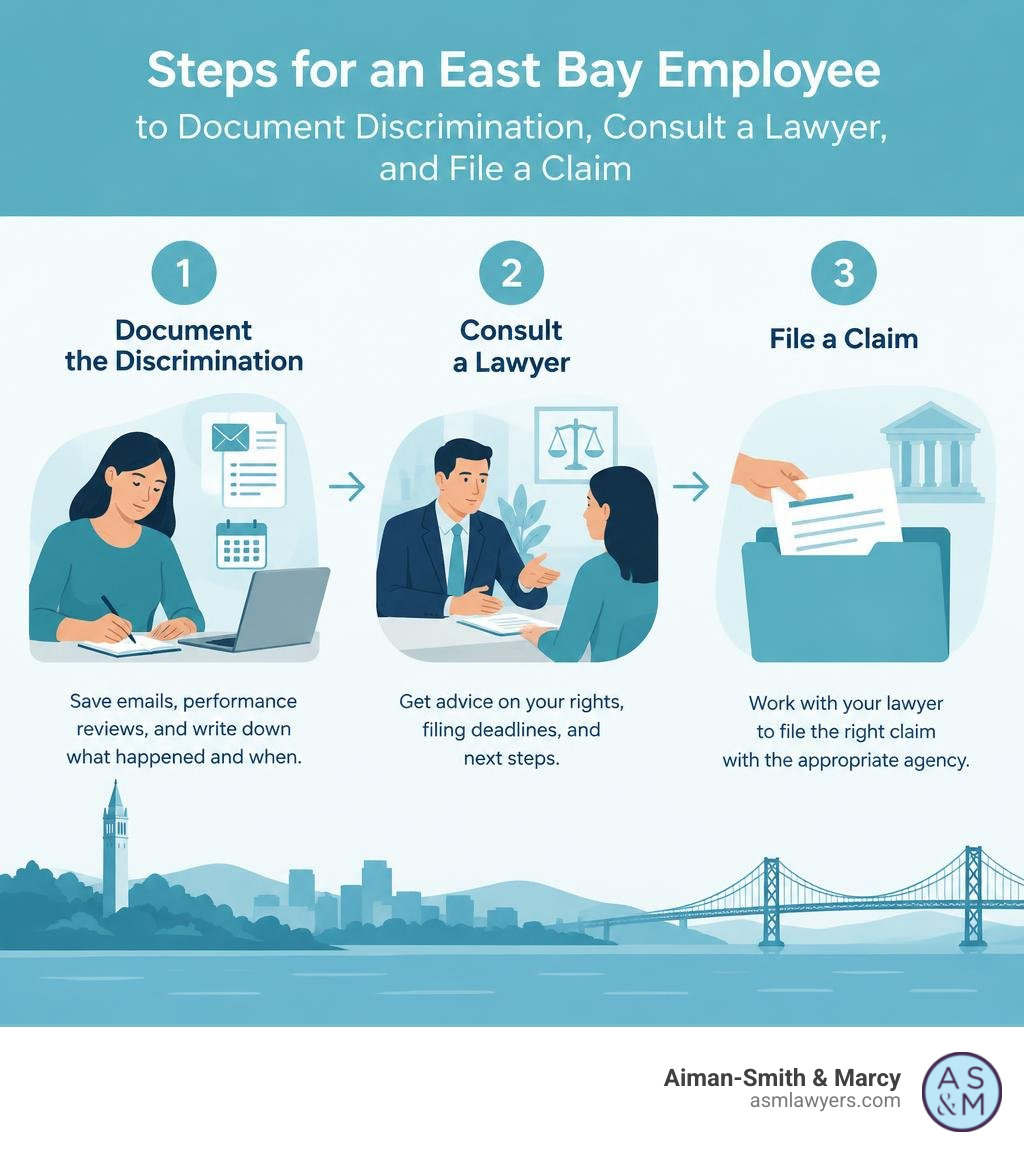
If you believe your employer treated you unfairly because of your race, gender, disability, age, or another protected trait, speak with a Berkeley employment discrimination lawyer soon. Save relevant emails and performance reviews, write down what happened and when, and ask how California filing deadlines apply to your case. When choosing a lawyer, look for someone who represents employees and can explain their experience with discrimination claims, fees, and next steps.
This guide covers the rights of workers in Berkeley, San Leandro, and the wider East Bay. It explains how a lawyer can assess the evidence, help file a complaint, and seek a fair outcome. The California Civil Rights Department publishes employment discrimination complaint guidance that can help you understand the administrative process before you consult counsel.
Understanding Workplace Discrimination Laws in Berkeley and the East Bay
Working in Berkeley, San Leandro, or anywhere across Alameda County means being part of one of the most dynamic economies in the country. From thriving tech startups and research laboratories to healthcare systems and retail hubs, East Bay workers drive immense value. Unfortunately, even in our progressive communities, illegal bias still occurs in offices, labs, and job sites.
Employees in Berkeley are shielded by a robust combination of state and federal statutes. The primary state law governing workplace bias is the California Fair Employment and Housing Act (FEHA), enforced by the California Civil Rights Department (CRD), formerly known as the DFEH. On the federal level, workers are covered by Title VII of the Civil Rights Act of 1964, the Americans with Disabilities Act (ADA), and the Age Discrimination in Employment Act (ADEA), overseen by the Equal Employment Opportunity Commission (EEOC).
While federal laws provide a baseline of protection, California’s FEHA offers significantly broader coverage for workers. For instance, FEHA applies to employers with five or more employees for discrimination claims (and just one employee for harassment claims), whereas Title VII generally requires at least 15 employees.
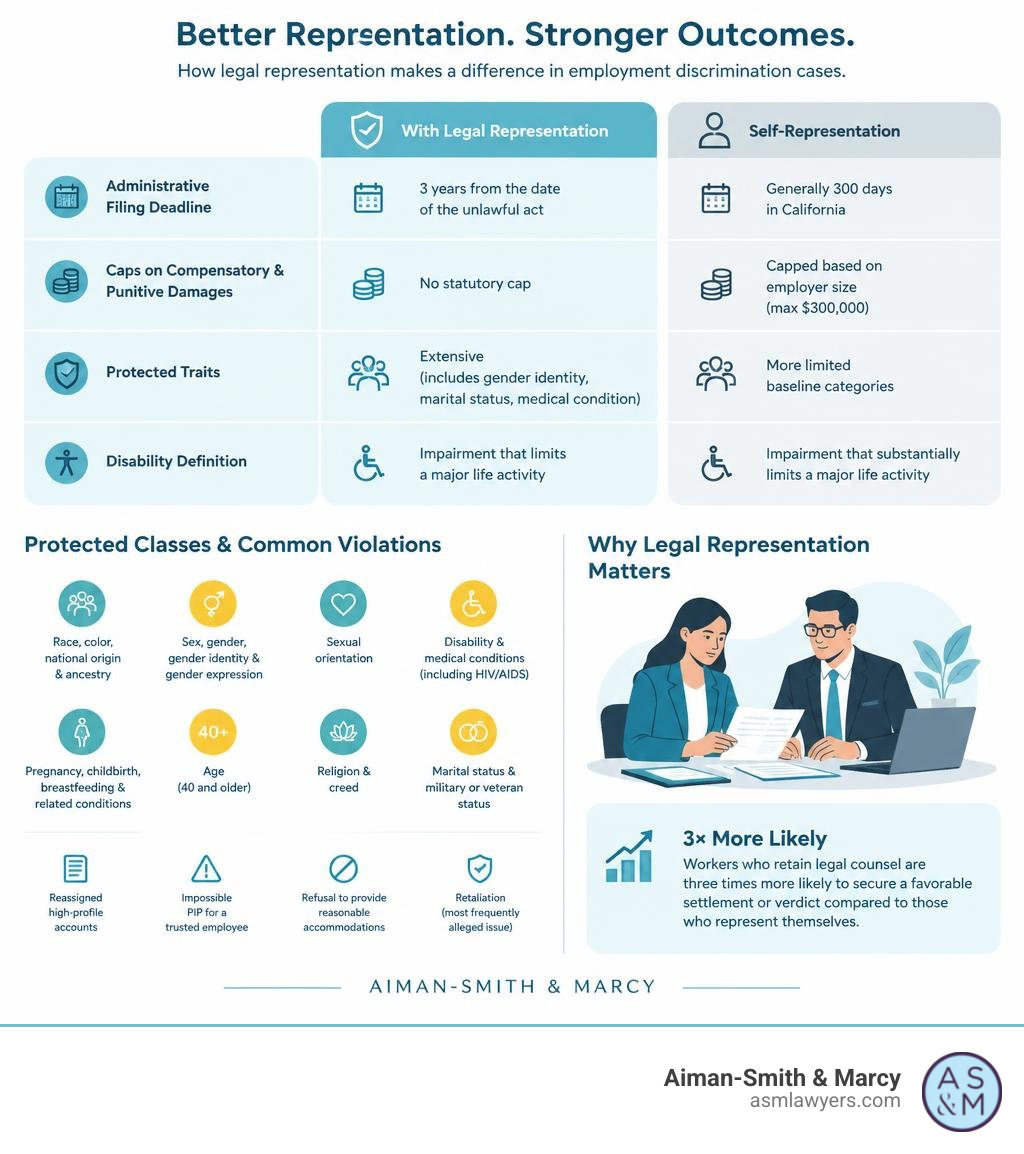
| Feature / Protection | California Fair Employment & Housing Act (FEHA) | Federal Law (Title VII, ADA, ADEA) |
|---|---|---|
| Employer Size Threshold | 5+ employees (1+ for harassment) | 15+ employees (20+ for ADEA age claims) |
| Administrative Filing Deadline | 3 years from the date of the unlawful act | Generally 300 days in California |
| Caps on Compensatory & Punitive Damages | No statutory cap | Capped based on employer size (max $300,000) |
| Protected Traits | Extensive (includes gender identity, marital status, medical condition) | More limited baseline categories |
| Disability Definition | Impairment that limits a major life activity | Impairment that substantially limits a major life activity |
Protected Classes and Common Workplace Violations
California law strictly prohibits adverse employment decisions based on protected personal characteristics. Under FEHA, employers cannot make hiring, firing, promotion, compensation, or job assignment decisions based on:
- Race, color, national origin, and ancestry
- Sex, gender, gender identity, and gender expression
- Sexual orientation
- Disability (physical and mental, including HIV/AIDS) and medical conditions (such as cancer or genetic traits)
- Pregnancy, childbirth, breastfeeding, and related medical conditions
- Age (40 and older)
- Religion and creed
- Marital status and military or veteran status
Violations often manifest as overt bias, but subtle discrimination is far more common. An employee might notice that after announcing a pregnancy, their high-profile accounts are reassigned, or an older tech worker with glowing reviews is suddenly placed on an impossible Performance Improvement Plan (PIP).
Disability discrimination frequently involves an employer’s outright refusal to engage in a timely, good-faith interactive process or denying reasonable accommodations. Retaliation is another widespread violation; in fact, EEOC data consistently shows retaliation is the most frequently alleged issue in workplace claims. When confronting mistreatment, knowing the right strategies for documenting harassment in the workplace is essential to preserving your legal claims.
Why Hiring a Berkeley Employment Discrimination Lawyer Matters

Taking on an employer—especially a well-funded corporation, university, or tech company—can feel overwhelming. Companies rarely admit to bias; instead, they mobilize human resources departments and corporate defense counsel to shield themselves from liability.
Navigating the administrative process and litigating in venues like the Alameda County Superior Court requires deep knowledge of procedural rules and evidentiary standards. We stand exclusively with employees, bringing decades of collaborative experience to level the playing field. According to research, workers who retain legal counsel are three times more likely to secure a favorable settlement or verdict compared to those who represent themselves.
What Sets a Berkeley Employment Discrimination Lawyer Apart
General practice lawyers may dabble in employment contracts, but employment discrimination litigation is a highly specialized discipline. A seasoned employee advocate understands how employers construct “legitimate, non-discriminatory reasons” for adverse actions—and, more importantly, how to expose those reasons as mere pretext.
Proving pretext often requires uncovering comparative evidence (showing that similarly situated coworkers outside your protected class were treated better), timing anomalies, shifting explanations from management, or departures from standard company policies. In high-conflict terminations, employers sometimes spread false narratives about an employee’s competence or ethics to justify firing them; in these situations, exploring workplace defamation legal options alongside discrimination claims can provide a path to full accountability.
When to Consult a Berkeley Employment Discrimination Lawyer
You do not need to wait until you are formally fired to seek legal guidance. Reaching out early allows you to understand your rights, protect yourself from retaliation, and avoid common pitfalls. You should consult an attorney if you experience:
- Adverse Employment Actions: Sudden demotions, unexplained pay cuts, disciplinary actions without merit, or denial of earned promotions.
- Denial of Accommodations: Refusal by HR or management to accommodate a medical condition, pregnancy, or religious practice.
- Hostile Work Environment: Pervasive, unwelcome conduct or comments related to a protected characteristic that make doing your job intolerable.
- Constructive Discharge: Working conditions made so severe and oppressive that any reasonable person would feel forced to resign.
- Retaliatory Smears: Management poisoning your reputation after you report discrimination. When facing reputational harm, identifying defamatory workplace statements can help determine whether additional tort claims apply.
Steps to Take if You Experience Workplace Discrimination

Protecting your legal rights requires deliberate, methodical action. If you suspect you are being targeted unfairly, take the following steps:
- Document Everything in Detail: Keep a personal log of all incidents. Record dates, times, locations, individuals involved, exact words spoken, and any witnesses. Keep this log on a personal device or notebook—never on your work computer or employer-provided phone.
- Preserve Key Communications: Retain copies of your performance evaluations, congratulatory emails, text messages, schedules, and relevant company policies. Do not take confidential company trade secrets, but ensure you preserve your own personnel records.
- Utilize Internal Reporting Procedures: Review your employee handbook and report the discrimination or harassment in writing to HR or a designated manager. This creates an official paper trail and triggers the employer’s legal obligation to investigate.
- Monitor for Wage and Hour Issues: Discrimination and compensation violations often go hand-in-hand. In California, non-exempt workers are entitled to minimum wage and overtime. For 2026, the California minimum wage is $16.90 per hour, making the exempt salary threshold $1,352 per week ($70,304 annually). When computer professionals are involved, keep in mind that the $27.63 hourly figure is only the federal baseline, and California law mandates significantly higher compensation thresholds to maintain an exemption. If your employer is shortchanging your pay or misclassifying your role, consulting an East Bay wage attorney ensures all your workplace claims are handled together.
- Secure an Administrative Right-to-Sue Notice: Before filing a lawsuit in court, you must exhaust administrative remedies by filing a complaint with the CRD or EEOC. An attorney can request an immediate right-to-sue notice when your case is ready for civil litigation.

Legal Remedies, Damages, and Attorney Fee Structures
Victims of unlawful employment discrimination in California have access to comprehensive remedies designed to make them whole and deter future workplace misconduct.
In California, average discrimination settlements typically range between $50,000 and $300,000, with severe harassment and clear retaliation cases often commanding higher values. Because FEHA includes fee-shifting provisions, losing employers can be ordered to pay the plaintiff’s attorney fees and litigation costs, giving workers crucial leverage during negotiations.
Most employee-side firms, including ours, represent clients on a contingency fee basis. Under this arrangement, you pay no upfront legal fees or out-of-pocket hourly rates; our fee is an agreed-upon percentage recovered only when we secure a successful settlement or verdict.
Frequently Asked Questions About East Bay Employment Claims
What is the deadline to file an employment discrimination claim in California?
Under California’s FEHA, employees have three years from the date of the unlawful discriminatory act to file an administrative complaint with the Civil Rights Department (CRD). Once the CRD issues a Right-to-Sue notice, you have one year from the date of that notice to file a civil lawsuit in court. Under federal law, the EEOC filing deadline is generally 300 days in California. Because missing a statutory window can permanently bar your claim, it is crucial to consult an attorney as soon as possible.
How much does it cost to retain an employment discrimination attorney?
We handle employment discrimination and employee rights cases on a contingency fee basis. You do not pay hourly retainers or upfront legal fees. If we do not recover money on your behalf through a settlement or trial verdict, you owe no attorney fees. Initial case evaluations are completely confidential and offered at no cost.
What compensation can an employee recover in a discrimination lawsuit?
An employee can pursue economic damages (including past lost wages, future lost compensation, and lost employment benefits), non-economic damages (compensation for emotional distress, pain, suffering, and reputational injury), and attorney fees. In cases where the employer’s conduct involved malice, oppression, or fraud, punitive damages may also be awarded by a court or jury to punish the wrongdoer.
Conclusion
Standing up against workplace bias protects not only your career and dignity, but also helps foster fair working conditions across Berkeley, San Leandro, and the entire East Bay. At Aiman-Smith & Marcy, our collaborative team has spent more than 25 years fighting exclusively for employees. If you are confronting mistreatment, learn how our team provides dedicated representation for workplace discrimination and harassment to help you secure the justice you deserve.
Legal Disclaimer This article is for general informational purposes only and does not constitute legal advice. Reading this article or contacting ASM Lawyers does not create an attorney-client relationship. Laws change over time and every situation is different. For advice about your specific circumstances, consult a licensed California attorney. Talk to ASM Lawyers Have questions about how California law applies to your situation? The team at ASM Lawyers offers consultations to help you understand your rights and options. Visit https://asmlawyers.com/contact/ to speak with an attorney about your case. Attorney Advertising.