
When You’re Too Sick to Work: What Emergency Sick Leave Actually Means for You
Emergency sick leave is paid time off you can take when a sudden illness, injury, or family health crisis makes it impossible to work — and in many cases, your employer is legally required to provide it.
Here’s a quick summary of what you need to know:
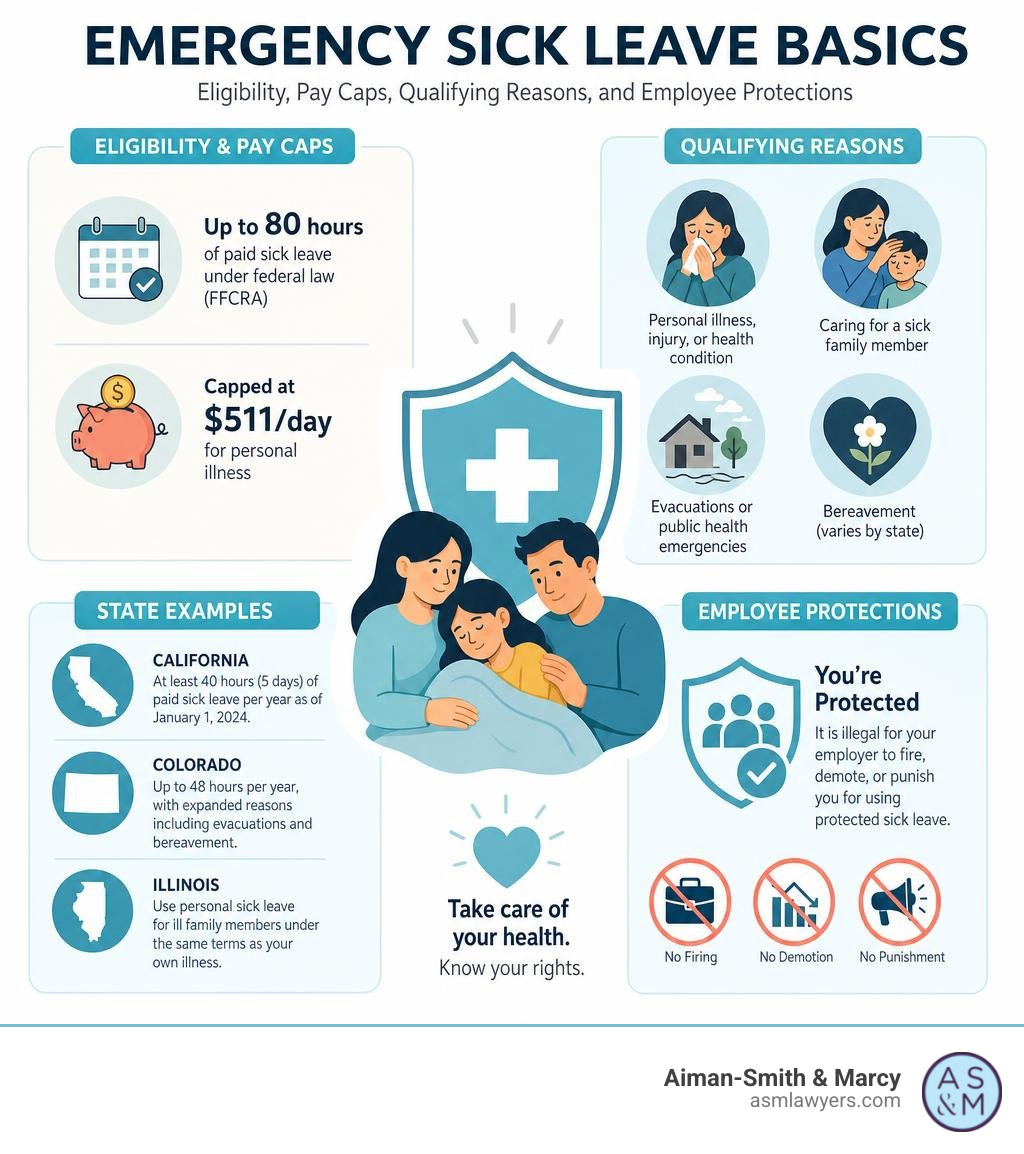
- Federal law (FFCRA): Covered employees could receive up to 80 hours of paid sick leave, capped at $511/day for personal illness
- California: Employers must provide at least 40 hours (5 days) of paid sick leave per year as of January 1, 2024
- Colorado: Up to 48 hours per year, with expanded reasons including evacuations and bereavement
- Illinois: Employees can use personal sick leave for ill family members under the same terms as their own illness
- Anti-retaliation: It is illegal for your employer to fire, demote, or punish you for using protected sick leave
If you’re an Oakland-area worker wondering whether your employer owes you paid time off — or whether they’ve already violated your rights — you’re not alone. Millions of employees across California are unsure what they’re entitled to, which laws apply to them, and what to do when their employer pushes back.
I’ll walk you through everything you need to know about emergency sick leave so you can protect yourself with confidence.
Understanding Federal Paid Time Off Under the FFCRA
When the COVID-19 pandemic turned the world upside down, the federal government stepped in with the Families First Coronavirus Response Act (FFCRA). This landmark legislation established a federal framework for emergency sick leave through two primary components: the Emergency Paid Sick Leave Act (EPSLA) and the Emergency Family and Medical Leave Expansion Act (EFMLEA).
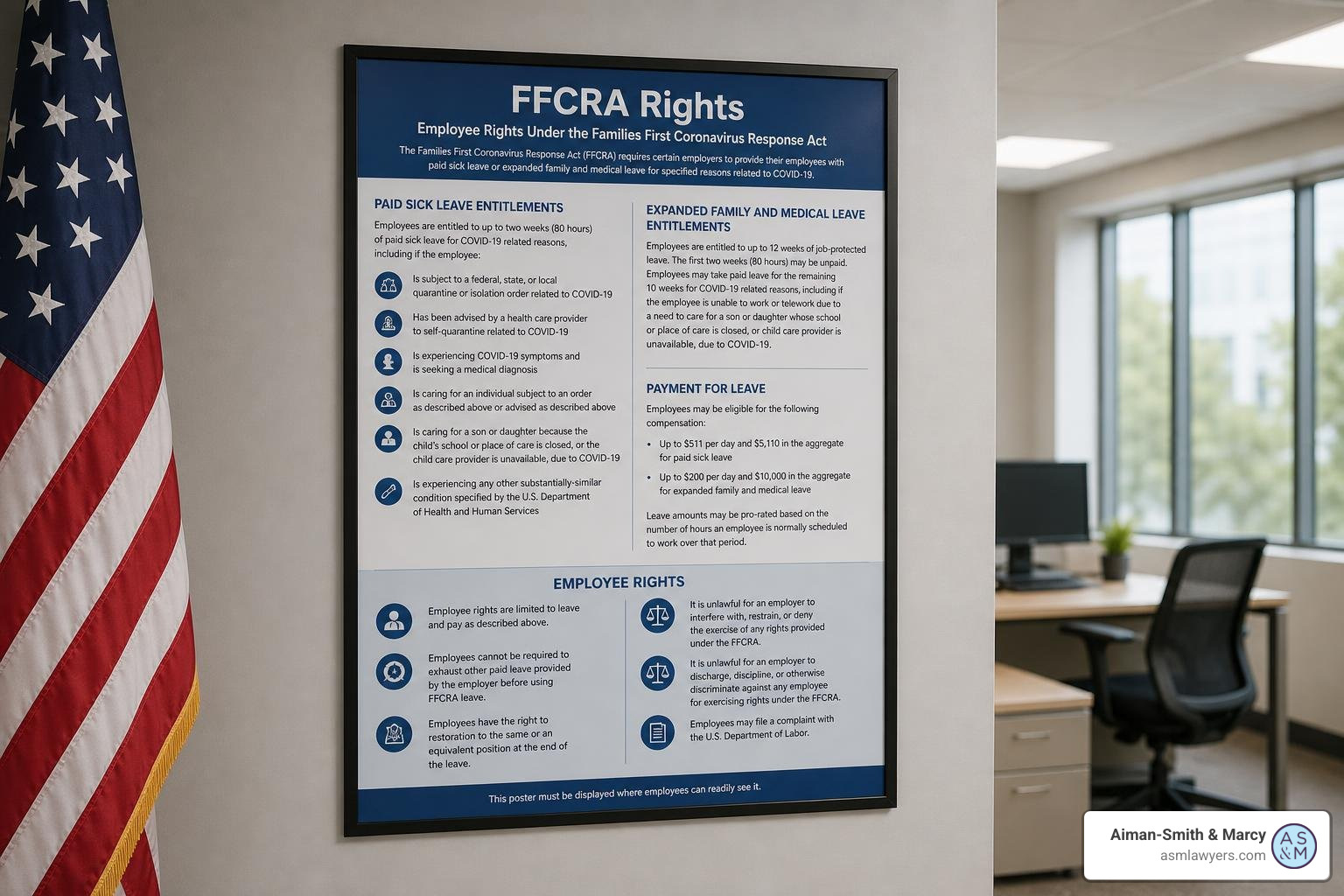
Under the EPSLA, full-time employees were eligible for up to 80 hours of paid sick leave. Part-time employees were entitled to leave based on their average hours worked over a typical two-week pay period. The federal government established strict guidelines for how this time was compensated based on the reason for the leave:
- Self-Care: If you were quarantining, isolating, or experiencing symptoms of COVID-19, your leave was paid at your regular rate or the applicable minimum wage (whichever was higher), capped at $511 per day and $5,110 in the aggregate.
- Caregiving: If you were caring for an individual under quarantine or a child whose school or place of care was closed, you received two-thirds of your regular pay, capped at $200 per day and $2,000 in the aggregate.
The EFMLEA expanded on this by providing up to 12 weeks of expanded family and medical leave. The first two weeks could be unpaid (or covered by EPSLA), while the remaining 10 weeks were paid at two-thirds of the employee’s regular rate, capped at $200 per day and $10,000 in the aggregate.
These mandates primarily applied to private employers with fewer than 500 employees, as well as certain public sector employers. However, the law carved out specific exemptions:
- Small Businesses: Employers with fewer than 50 employees could claim a hardship exemption from the childcare-related leave requirements if compliance threatened the financial viability of their business.
- Healthcare and First Responders: Employers were permitted to exclude healthcare providers and emergency responders from these leave provisions to prevent staffing shortages in critical sectors.
To ease the financial burden on businesses, the federal government offered tax credits to employers who provided this leave. These came in the form of FICA payroll tax offsets, allowing employers to retain funds they would otherwise deposit with the IRS or claim accelerated refunds.
For federal civil service workers, the U.S. Office of Personnel Management (OPM) maintains separate rules. Federal employees can access accrued sick leave with no overall limit for personal medical needs, and agencies can advance up to 240 hours (30 days) of sick leave for serious conditions. You can read more in the OPM Personal Sick Leave Guidelines.
While the mandatory paid leave periods under the FFCRA have expired, the program set a vital precedent for how emergency leave functions. For historical context and how these rules shaped modern workplace standards, you can find more info about COVID-19 employee rights.
How State Laws Compare to Federal Requirements
Because federal mandates have transitioned to voluntary programs, state laws have become the primary line of defense for workers needing emergency sick leave. States like California, Colorado, and Illinois have enacted robust sick leave laws that offer varying levels of protection.
California
California remains a trailblazer in worker protections. Starting January 1, 2024, the state increased its mandatory paid sick leave requirement. California employers must now provide at least 5 days or 40 hours of paid sick leave per year, up from the previous requirement of 3 days or 24 hours.
In California, employees accrue sick leave at a rate of 1 hour for every 30 hours worked, though employers can choose to frontload the entire 40 hours at the start of the year. Employers can set an overall accrual cap, but it cannot be less than 80 hours or 10 days. Furthermore, California permits agricultural and outdoor employees to use their paid sick days to avoid hazardous environmental conditions, such as wildfire smoke, extreme heat, or flooding during declared emergencies. For a deeper look at these rules, see more info about California time off requirements.
Colorado
Under Colorado’s Healthy Families and Workplaces Act (HFWA), employees can accrue and use up to 48 hours of paid sick leave per year. In August 2023, Colorado expanded the qualifying reasons for this leave. In addition to standard medical needs, Colorado workers can now use their sick time for:
- Bereavement or attending services for a deceased family member.
- Caring for a family member whose school or care facility has closed due to severe weather, power outages, or utility loss.
- Evacuating their home due to unexpected environmental emergencies.
Illinois
Under the Illinois Employee Sick Leave Act, employees are entitled to use their personal sick leave benefits to care for covered family members. This includes children, spouses, siblings, parents, grandparents, and domestic partners. The law ensures that you can use your accrued sick time to provide physical or emotional support to a relative on the exact same terms that would apply to your own illness. Employers are allowed to limit this family-care usage, but they cannot cap it below the amount of leave the employee would accrue over a six-month period.
| Jurisdiction | Minimum Annual Sick Leave | Standard Accrual Rate | Key Emergency Provisions |
|---|---|---|---|
| Federal (FFCRA Framework) | Up to 80 hours (for COVID-19 reasons) | N/A (Immediate entitlement) | COVID-19 quarantine, self-care, and school closures |
| California | 40 hours (5 days) | 1 hour per 30 hours worked | Environmental emergencies (wildfire smoke, heat, floods) |
| Colorado | 48 hours | 1 hour per 30 hours worked | Weather closures, evacuations, and bereavement |
| Illinois | Varies by employer policy | Varies | Family care on the same terms as personal illness |
Employee Rights and Protections Against Retaliation
Taking emergency sick leave when you are ill or caring for a loved one is a legally protected right. Unfortunately, some employers still attempt to penalize workers for taking time off. Both federal and state laws contain strict anti-retaliation provisions to protect you.
If your employer fires, demotes, suspends, or threatens you for requesting or taking protected sick leave, they are breaking the law. Under the FFCRA framework, failing to pay required emergency leave is legally treated as a failure to pay minimum wage under the Fair Labor Standards Act (FLSA). This exposes non-compliant employers to severe penalties, including back wages, liquidated damages, and attorney’s fees.
Additionally, employers are prohibited from enforcing unfair administrative hurdles, such as:
- Mandatory Shift Coverage: Your employer cannot require you to find a replacement worker as a condition for taking your legally protected sick leave.
- Unreasonable Documentation Demands: Employers cannot demand highly detailed medical records or force you to explain the private details of a medical condition.
For comparison, under the Massachusetts Earned Sick Time Law, employers can only request a doctor’s note if an employee is absent for more than 24 consecutively scheduled work hours. In California, employers cannot deny sick leave simply because you do not have a medical certification.

If you believe your rights have been compromised, it is critical to document every communication with your employer. Keeping written records of leave requests, text messages, and emails is vital for protecting your career. To learn more about your local legal safeguards, check out more info about California employee rights.
Key Rules for Requesting and Calculating Emergency Leave
Navigating the logistics of requesting and calculating your emergency sick leave does not have to be overwhelming. Here are the core rules that govern how this leave is earned, calculated, and requested:
Accrual vs. Frontloading
Employers generally have two ways to provide sick leave. They can use the accrual method (typically 1 hour of sick time for every 30 hours worked) or the frontloading method (giving you the full yearly allotment, such as 40 hours in California, on your first day of work or the start of the benefit year). If your employer uses an accrual system, unused hours must carry over to the next year, though employers can set a reasonable cap on total accrual.
Part-Time vs. Full-Time Calculations
Full-time employees are typically eligible for the maximum hours allowed under local or federal law (such as 80 hours under the FFCRA or 40 hours under California law). Part-time employees receive a pro-rated amount. For example, under the FFCRA, a part-time worker’s leave hours were calculated based on the average number of hours they worked over a typical two-week pay period.
Documentation and Notice
If your need for leave is foreseeable (like a scheduled surgery), you must give your employer reasonable advance notice. If the emergency is sudden, you should notify them as soon as practical. While employers can ask for basic confirmation of your eligibility, they cannot make the process excessively difficult.
PTO Exhaustion
A common question is whether your boss can force you to drain your vacation days or regular paid time off (PTO) before using emergency sick leave. The answer is a firm no. Under federal FFCRA guidelines and California state law, emergency paid sick leave must be provided in addition to your existing accrued PTO. Your employer cannot force you to use your regular vacation time first. For more details on what your employer can and cannot do regarding your leave, see more info about exempt employee rights.
Frequently Asked Questions About Emergency Sick Leave
What are the qualifying reasons for taking emergency sick leave?
Under federal and state frameworks, qualifying reasons generally include:
- Being subject to a local, state, or federal quarantine or isolation order.
- Being advised by a healthcare provider to self-quarantine due to symptoms or exposure.
- Experiencing physical or mental illness, injury, or seeking preventive medical care.
- Caring for an immediate family member who is ill, quarantining, or recovering from a medical procedure.
- Caring for a child whose school or childcare facility is closed due to a public health emergency, extreme weather, or utility failure.
- Addressing legal, medical, or safety needs if you or a family member are recovering from domestic violence or qualifying acts of violence.
Can my employer force me to use PTO before taking emergency sick leave?
No. Legally mandated emergency sick leave is designed to be an independent pool of time off. Employers are prohibited from requiring you to exhaust your accrued vacation days, personal days, or standard PTO before utilizing protected emergency sick leave. The choice of which leave category to use rests with the employee.
How is emergency leave calculated for part-time versus full-time employees?
Full-time employees are entitled to the standard statutory maximums (e.g., up to 80 hours under federal emergency frameworks or 40 hours under California state law).
For part-time employees, the hours are calculated based on their average schedule. If a part-time employee works an average of 20 hours per week, they would be entitled to 40 hours of leave under an 80-hour maximum framework. If their schedule varies, employers typically calculate the average hours worked per day over a six-month lookback period to determine their daily leave pay.
Conclusion
Understanding your rights regarding emergency sick leave is essential for protecting both your health and your financial security. Whether you are dealing with a sudden illness, caring for a family member, or facing an environmental emergency, the law is designed to ensure you do not have to choose between your paycheck and your well-being.
If your employer has denied your rightful sick leave, forced you to work while sick, or retaliated against you for taking time off, you do not have to handle it alone. At Aiman-Smith & Marcy, our collaborative team of attorneys has spent more than 25 years working together to stand up for workers in Oakland and throughout California. We specialize in employment law, unpaid wages, and class actions, and we are here to help you hold non-compliant employers accountable.
To learn more about your options or to discuss your situation, check out more info about California paid sick leave entitlement or reach out to us today for a consultation.


